

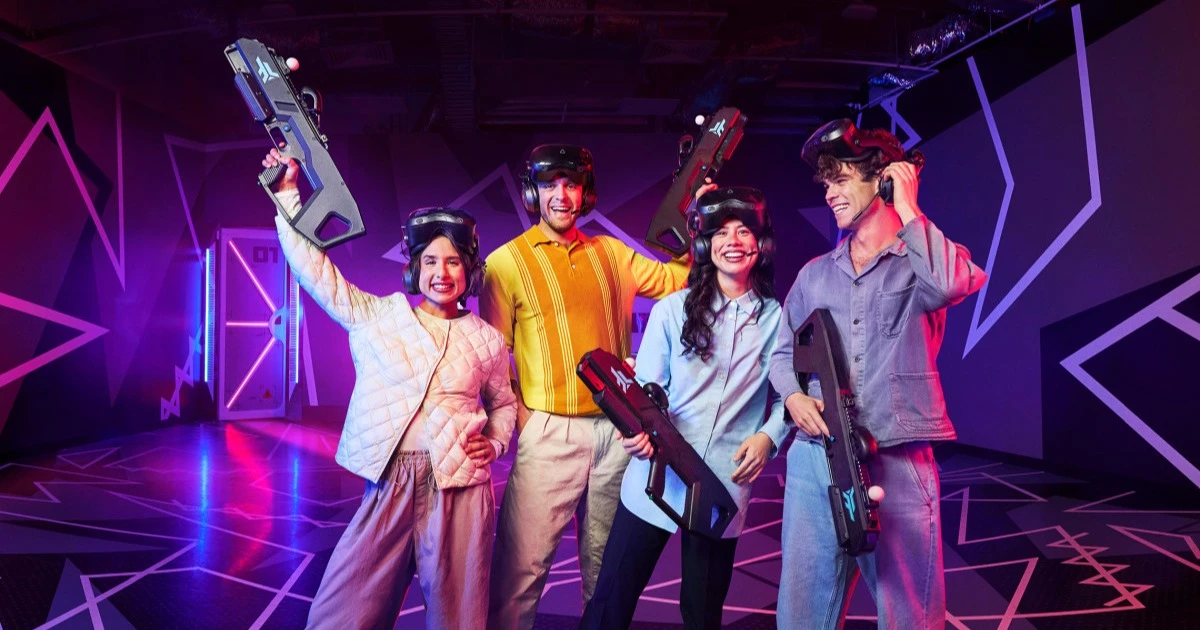
Virtual Reality has come a long way—from clunky headsets and pixelated worlds to immersive environments that feel almost indistinguishable from reality.
But now, as we step into VR Gaming in 2026, one question is echoing through the gaming community:
Are we finally entering the Ready Player One era?
With VR hardware becoming lighter, smarter, and more affordable, and with games evolving into massive interactive universes, the line between physical and digital worlds is blurring at a speed no one expected.
In 2026, VR is no longer just a “cool gadget”—it’s becoming a new dimension of entertainment, socialization, and digital life.
This blog explores where VR gaming stands today, how close we are to the hyper-immersive Oasis-style worlds, and what challenges we still need to overcome before fully stepping into a Ready Player One reality.
Table of Contents
- The Evolution of VR Gaming So Far
- What VR Gaming Looks Like in 2026
- Why Gamers Believe We’re Nearing a Ready Player One Reality
- The Biggest Breakthroughs Powering VR’s 2026 Transformation
- Challenges Still Holding VR Back
- Are We Really Entering the Ready Player One Era?
- What the Future of VR Could Look Like
- Conclusion
- Frequently Asked Questions (FAQs)
The Evolution of VR Gaming So Far
A Quick Look Back at VR’s Journey
Just a decade ago, VR seemed like a futuristic dream. Early prototypes were heavy, expensive, and often caused motion sickness—far from the smooth, cinematic worlds we imagined. But as tech companies invested billions, VR rapidly transformed:
- 2016–2019: The rise of consumer VR (Oculus Rift, HTC Vive).
- 2020–2023: Standalone VR headsets became mainstream.
- 2024–2025: Mixed reality merged VR + AR into one immersive experience.
Now, with VR Gaming in 2026, it’s clear we’re deeper into the VR revolution than ever before.
The Turning Point: Social VR & MMOs
VR shifted from being a solo gaming device to a gateway into massive digital communities. Social VR platforms made it possible to:
- Attend concerts
- Meet friends
- Explore open worlds
- Even work in virtual offices
As these virtual universes expanded, gamers began asking the ultimate question: How close are we to the Oasis from Ready Player One?
What VR Gaming Looks Like in 2026
2026 marks the most transformative year for virtual reality so far. VR isn’t just about “playing games” anymore—it’s becoming a lifestyle.
1. Next-Gen VR Headsets
The headsets of 2026 are:
- Wireless and ultra-lightweight
- Capable of 8K resolution per eye
- Powered by AI eye-tracking
- Energy efficient
- Equipped with advanced haptic sensors
These devices offer visuals and responsiveness so smooth, the real world almost feels outdated by comparison.
2. Hyper-Realistic Worlds
Game engines like Unreal Engine 6 now generate environments with:
- Photorealistic textures
- Dynamic weather
- Natural NPC behavior powered by AI
- Ecosystems that evolve over time
Many VR games in 2026 look as real as a high-budget sci-fi film.
3. Full-Body Immersion Is Now Mainstream
Accessories that were once experimental like haptic suits are now widely accessible.
Players can feel:
- Weight
- Recoil
- Weather
- Texture
- Physical feedback from objects
Walking, running, and interacting inside VR is more intuitive than ever.
4. VR Fit & Health Apps Are Exploding in Popularity
VR gyms and immersive sports games have become part of daily fitness routines. VR boxing, VR dancing, and virtual endurance training are attracting more daily users than traditional fitness apps.
Why Gamers Believe We’re Nearing a Ready Player One Reality
A Fully Connected Virtual Universe
Just like the Oasis, VR games in 2026 are interconnected. A player’s avatar, achievements, and inventory can follow them across platforms thanks to blockchain-secured identities.
Imagine:
- Owning virtual clothes
- Travelling between worlds
- Carrying XP and currency across games
It’s happening now.
Massive Live Events Inside VR
Millions of players attend:
- Virtual concerts
- Movie premieres
- Esports tournaments
- Social parties
VR is evolving into a global entertainment venue, not just a gaming accessory.
AI-Driven NPCs Feel Almost Human
NPCs now react dynamically using AI. They:
- Learn from player behavior
- Adapt strategies in real time
- Hold natural conversations
- Build relationships over time
This is one of the biggest steps toward a Ready Player One-style virtual world.
VR Is Becoming a Replacement for Traditional Gaming
Gamers no longer ask “Is VR worth it?” Now they ask:
“Why would I play flat games when VR offers a better version of everything?”
The Biggest Breakthroughs Powering VR’s 2026 Transformation
1. Photonic Processors (Lightning-Fast VR Chips)
These chips use light instead of electricity—meaning no lag, no overheating, and instant rendering of massive environments.
2. Neural Input & Brain-Sensing Enhancements
Non-invasive neural sensors read micro-signals from your brain to:
- Reduce controller use
- Predict your movement
- Adjust environments based on your emotions
This is where the Oasis-level immersion begins.
3. Mixed Reality-Integrated VR Worlds
Players can bring real-world items into VR through MR scanning:
- Your room
- Your desk
- Real objects
The physical and virtual worlds merge seamlessly.
4. Hyper-Real Haptic Technology
Haptic gloves and suits now simulate:
- Temperature
- Pressure
- Vibration
- Texture
- Force feedback
You can feel the game.
5. AI Game Directors
Think of VR games that rewrite their stories based on your choices, skill level, and emotional responses.
This is gaming 2.0.
Challenges Still Holding VR Back
Even with massive advancements, VR has its hurdles before truly becoming a Ready Player One-level universe.
1. High Cost of Full Immersion Gear
Basic VR is affordable.
But full immersion setups—treadmills, haptic suits, spatial sensors—still cost a premium.
2. Physical Space Limitations
Not everyone has a room dedicated to VR movement.
3. Motion Sickness—Still a Problem for Some Players
Although improved, players sensitive to motion still struggle.
4. Privacy & Data Concerns
VR tracks:
- Eye movement
- Body movement
- Personal spaces
- Emotional responses
This data must be protected.
5. Lack of Standardization Across Games (H3)
Not all VR universes connect seamlessly yet.
The Oasis-style unified world is coming—but it’s not fully here.
Are We Really Entering the Ready Player One Era?
Let’s break it down.
✔ Hyper-Realistic VR Worlds — Yes
Visual fidelity now rivals Hollywood CGI.
✔ Full Body Immersion — Yes
Haptic suits and gloves are becoming mainstream.
✔ AI-Driven Worlds — Yes
NPCs and game stories are smarter than ever.
✔ Massive VR Social Worlds — Yes
Virtual concerts and events attract millions.
✘ Completely Unified Digital Universe — Not Yet
We’re close, but still need standardization and cross-platform integration.
✘ Affordable Full-Immersion for Everyone — Not Yet
Cost remains a barrier.
What the Future of VR Could Look Like
1. A Single Unified VR Universe
By 2030, experts predict a universal VR ecosystem where:
- One avatar works everywhere
- All games are interconnected
- Virtual jobs are common
- VR becomes as normal as smartphones
2. VR Work, Education & Travel
Imagine:
- Attending VR universities
- Working in holographic offices
- Exploring virtual replicas of global cities
It’s already happening in early forms.
3. Hyper-Real Sensory Simulation
Future haptic systems may simulate:
- Smell
- Wind
- Weight
- Temperature
Bringing us even closer to Oasis-style worlds.
Conclusion
VR Gaming in 2026 is not just an evolution—it’s a revolution.
With stunning visuals, intelligent AI, full-body immersion, and interconnected worlds, we’re closer to Ready Player One than ever before.
But we’re not fully there yet.
To reach the true Oasis-level universe, VR must overcome:
- Cost barriers
- Standardization issues
- Privacy concerns
- Wider mainstream adoption
Still, one thing is clear—VR’s future is no longer science fiction.
It’s happening now, shaping the way we play, work, socialize, and live.
The Ready Player One era isn’t years away;
we’re already stepping into it—one login at a time.
Frequently Asked Questions (FAQs)
Is VR Gaming in 2026 better than traditional gaming?
For many gamers, yes. The immersion, realism, and social experiences surpass flat-screen gaming.
Are VR headsets in 2026 affordable?
Basic headsets are affordable, but high-end full-body VR can still be expensive.
Will VR replace all gaming?
Not completely, but VR will dominate certain genres like RPGs, FPS, social worlds, and fitness.
Is VR safe for long-term use?
With ergonomic headsets and reduced motion sickness, VR is safer than before—though breaks are still recommended.
How close are we to a Ready Player One universe?
We’re halfway there. Visuals, immersion, and AI are nearly ready.